What Is a Vanity URL? A Guide to Branded Domains
Published on: August 8, 2026
In an era where every character counts and brand trust is currency, the links you share are more than just pathways—they're statements. A cluttered, generic URL filled with random characters tells your audience that your content is automated and potentially suspicious. A clean, branded vanity URL tells an entirely different story. This comprehensive guide explores what vanity URLs are, how they function, why the world's most successful brands rely on them, and how you can implement them to increase click-through rates, strengthen brand recognition, and transform every shared link into a powerful marketing asset.
What Is a Vanity URL?
A vanity URL is a custom, branded web address that is short, memorable, and descriptive—designed specifically to replace a long, complex, or unattractive original URL. Unlike generic short links such as those produced by basic URL shorteners, a vanity URL incorporates your brand name and a relevant keyword, making it instantly recognizable and trustworthy to anyone who encounters it.
At its core, a vanity URL serves as a strategic bridge between your audience and your content. It takes an
unwieldy destination address—often cluttered with tracking parameters, category paths, date stamps, and database
identifiers—and distills it into something clean, professional, and purposeful. When someone encounters
yourbrand.link/guide instead of a ninety-character parameter string, they immediately understand two
critical things: who is sending them somewhere, and what they can expect when they arrive.
The Anatomy of a Vanity URL
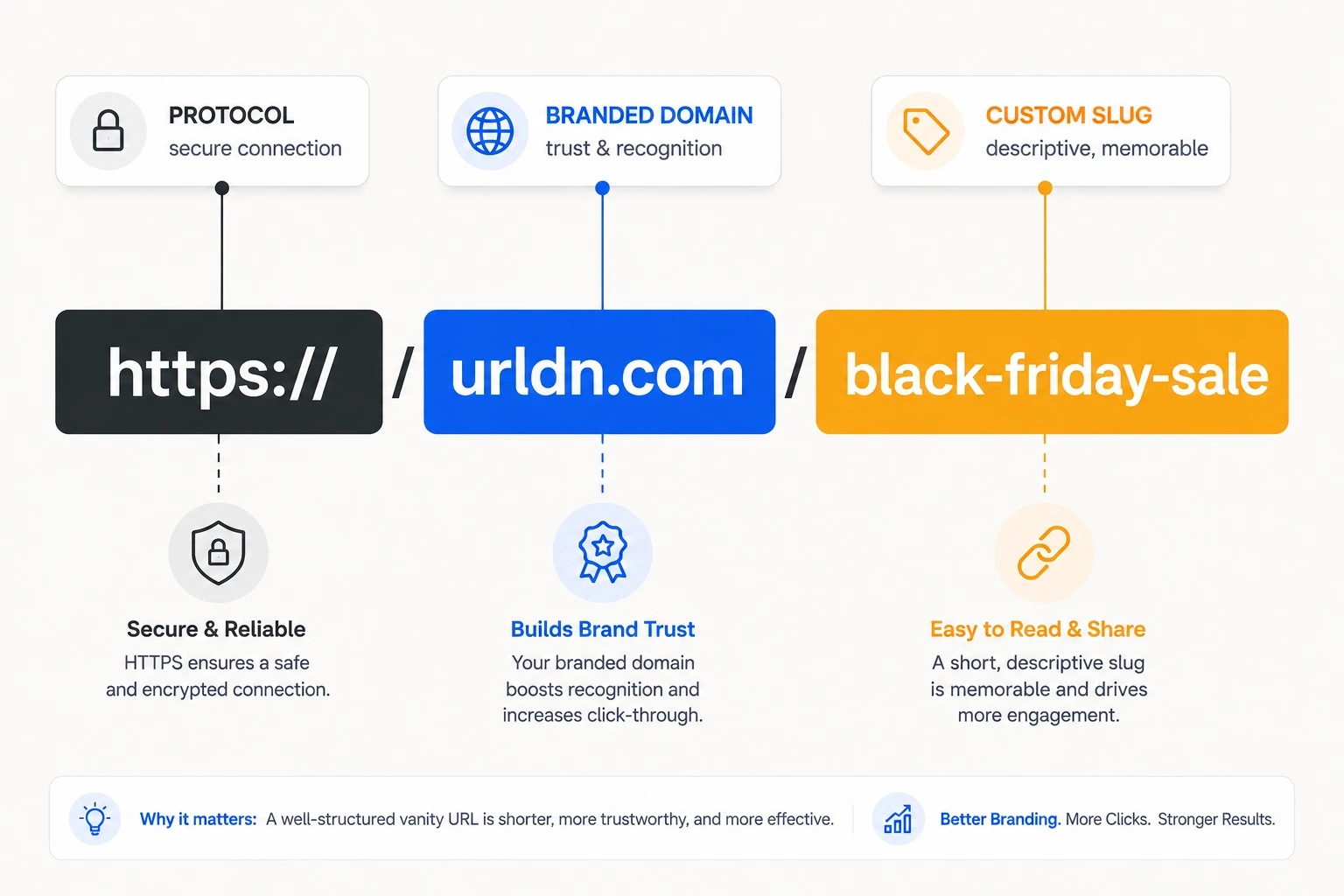
Understanding the structural components of a vanity URL empowers you to create more effective links. Every successful vanity URL consists of three essential elements working in harmony to create a cohesive, branded user experience.
| Component | Example | Purpose |
|---|---|---|
| Protocol | https:// |
Establishes a secure, encrypted connection between the user and the server, displaying the trust-indicating padlock icon in browsers |
| Branded Domain | yourbrand.link |
Reinforces brand identity with every impression and distinguishes your links from generic, unbranded alternatives |
| Custom Slug | /guide |
Describes the destination content using readable, relevant keywords that set clear expectations for the user |
Why the Term "Vanity"?
The word "vanity" might initially suggest superficiality or self-importance, but in the context of web addresses, it refers to customization for identity and recognition. Much like a vanity license plate on an automobile displays a personalized message rather than a random sequence of letters and numbers, a vanity URL displays your brand's identity while serving a deeply practical function. It is not about ego—it is about clarity, trust, and delivering a superior user experience that reflects your brand's attention to detail.
Consider the difference between receiving a handwritten invitation and a mass-printed flyer. Both convey information, but one signals care, authenticity, and intentionality. A vanity URL operates on the same psychological principle. It tells your audience that you have considered their journey, respected their time, and invested in making their experience seamless.
How Vanity URLs Work
Vanity URLs operate on a simple but powerful technical mechanism known as URL redirection. When a user clicks a vanity URL, they are instantly and transparently forwarded to the original destination URL. The user experiences no perceptible delay and sees no difference in the final page content—except for the confidence they felt when clicking a trusted, branded link rather than a suspicious string of random characters.
The Technical Process
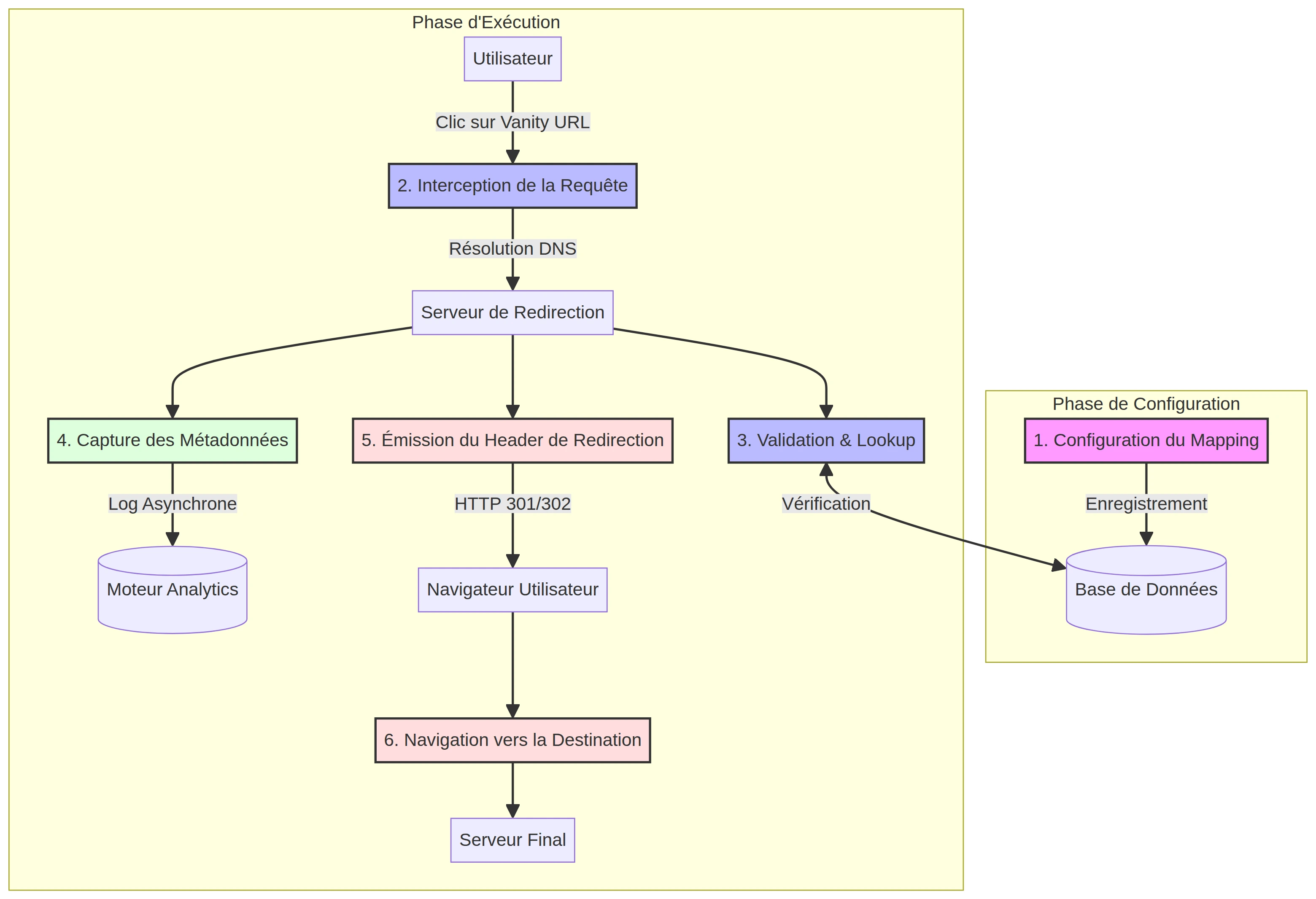
Behind every vanity URL lies a streamlined redirection pipeline that happens in milliseconds. Understanding this process helps you appreciate why vanity URLs are so reliable and how they can be optimized for different campaign types.
- Creation: You input your long destination URL into a professional link management platform like URLDN, specifying your branded domain and desired custom slug.
- Redirection Setup: The platform creates a redirect rule that maps your vanity URL to the destination URL, configured as either a permanent or temporary redirect depending on your campaign needs.
- User Engagement: A prospective customer encounters your vanity URL on social media, in an email newsletter, on a billboard, or through a word-of-mouth recommendation.
- Request Routing: The platform's high-performance server receives the click request, matches the custom slug to your configured destination, and initiates the forwarding process.
- Analytics Capture: Before the redirect completes, the platform logs comprehensive click data including geographic location, device type, browser, referrer source, and precise timestamp.
- Destination Delivery: The user's browser arrives at your content seamlessly, often faster than if they had waited for a heavy original page to load directly.
Types of Redirects
Not all redirects are created equal. The type of redirect you choose has significant implications for search engine optimization, analytics accuracy, and long-term campaign management.
| Redirect Type | HTTP Status | Best Use Case | SEO Impact |
|---|---|---|---|
| Permanent Redirect | 301 | Evergreen content, long-term campaigns, foundational resources | Passes full link equity and ranking signals to the destination URL |
| Temporary Redirect | 302 | Limited-time promotions, seasonal campaigns, A/B testing scenarios | Does not pass link equity; preserves authority on the vanity URL itself |
Vanity URL vs Short URL
This distinction represents one of the most common points of confusion in link management. While all vanity URLs are technically short URLs, not all short URLs are vanity URLs. Understanding this difference is crucial for making strategic decisions about which type of link to deploy in different contexts.
A generic short URL takes a long address and compresses it into a brief, randomized string. It succeeds at its primary goal—saving space—but fails at almost every marketing objective beyond that. It does not build brand recognition. It does not inspire trust. It offers no preview of the destination content. In many ways, a generic short URL is a missed opportunity to reinforce your brand with every single impression.
Detailed Comparison
| Feature | Generic Short URL | Vanity URL |
|---|---|---|
| Typical Example | bit.ly/3xK9mP2 |
yourbrand.link/sale |
| Brand Presence | None—uses a generic third-party domain | Full—displays your custom branded domain |
| User Trust Level | Low—users cannot verify the destination source | High—users immediately recognize the sending brand |
| Slug Customization | Random or semi-random alphanumeric characters | Fully customizable using relevant descriptive keywords |
| Memorability | Essentially impossible to remember | Easy to recall and share verbally |
| Click-Through Rate | Baseline performance | Up to 39% higher than generic alternatives |
| Analytics Depth | Basic click counting | Advanced insights with branded context and campaign attribution |
Research consistently demonstrates that branded links dramatically outperform generic short links in click-through rates because users can see who is sending them to what before they ever commit to a click. This transparency eliminates the hesitation and suspicion that random short links naturally generate.
When to Use Each Type
Generic short URLs still retain value in specific scenarios. They work adequately for quick internal sharing where branding is irrelevant, temporary links for development testing, or emergency situations where you have not yet configured a custom domain. However, these use cases should be the exception, not the rule.
Vanity URLs should be your default choice for every customer-facing communication. This includes social media posts and bio links, email marketing campaigns, paid advertising creative, printed materials and packaging, podcast mentions, video descriptions, and any link you want people to remember, trust, and click with confidence.
Vanity URL vs Branded URL
These terms are frequently used interchangeably across the marketing industry, but a subtle and strategically important distinction exists between them. Understanding this relationship helps you build a more coherent link architecture for your brand.
Defining Branded URLs
A branded URL is any web address that uses a custom domain associated with your brand identity. This category is broad and encompasses your primary website, subdomains, campaign-specific domains, and any other digital property that carries your brand name.
- Your main corporate website:
yourbrand.com - A dedicated blog subdomain:
blog.yourbrand.com - A campaign landing page:
summer.yourbrand.com - A customer portal:
app.yourbrand.com
Defining Vanity URLs
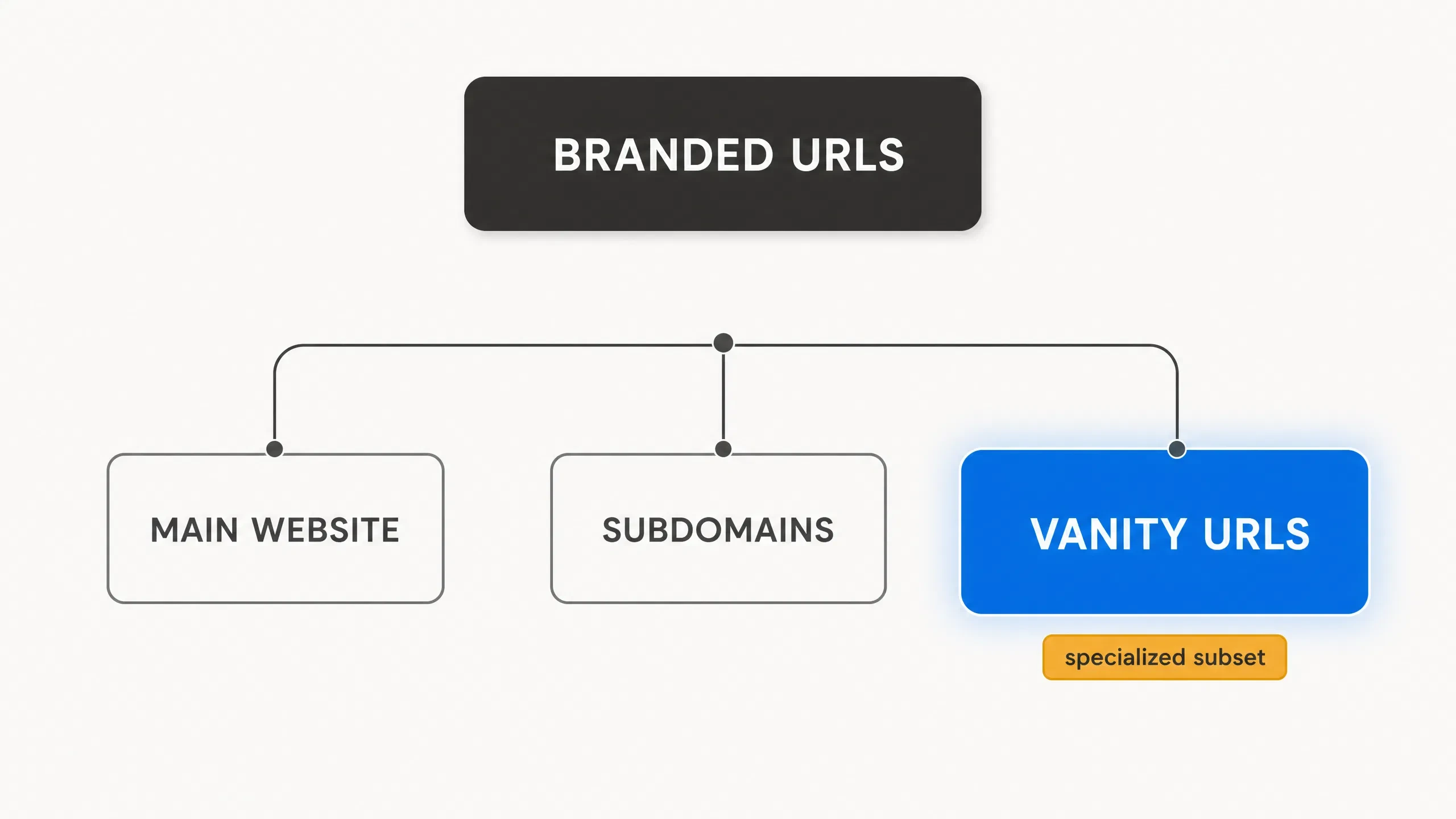
A vanity URL is a specific subset of branded URLs. It refers exclusively to shortened, customized links with descriptive slugs that are created through a professional link management or URL shortening platform. A vanity URL must satisfy three specific criteria to earn its classification.
- It must use a branded domain that reflects your organization
- It must be shortened to an easily shareable length, typically under thirty characters total
- It must employ a custom slug that describes the destination using relevant keywords
The Hierarchical Relationship
Visualizing this relationship helps clarify when you are working with a general branded URL versus a true vanity URL. All vanity URLs live inside the branded URL family, but they represent a specialized form optimized for marketing distribution.
For example, https://nike.com/running-shoes is a branded URL. It uses the Nike domain and describes
the content. However, https://nike.shoes/running is a vanity URL. It uses a dedicated short domain,
is significantly shorter, and is specifically engineered for sharing across marketing channels where space and
memorability are constrained.
Vanity URL vs URL Slug
Another frequent point of confusion involves the difference between a vanity URL and a URL slug. While both appear at the end of a web address and both use descriptive words, they serve fundamentally different purposes within your digital architecture.
What Is a URL Slug?
A URL slug is the specific portion of a URL that comes after the domain name and identifies a particular page within your website's structure. It is an integral component of your main website's URL architecture and remains fixed as part of the destination address itself.
Consider the following example: https://yourbrand.com/blog/what-is-a-vanity-url. In this address,
the slug is what-is-a-vanity-url. It organizes your content, helps search engines understand your
page hierarchy, and provides users with context about the page content before they click.
What Is a Vanity URL?
A vanity URL, by contrast, is a separate, standalone web address that redirects to a destination page. The destination page may have its own URL slug, but the vanity URL exists independently as a marketing layer that sits between your audience and your content.
For instance, you might create the vanity URL https://yourbrand.link/vanity-guide that redirects to
https://yourbrand.com/blog/what-is-a-vanity-url. The vanity URL is not part of the destination page's
native address. It is a strategic overlay designed for distribution, tracking, and user experience optimization.
Critical Differences
| Aspect | URL Slug | Vanity URL |
|---|---|---|
| Location | Integral part of the destination URL itself | A separate redirect URL that operates independently |
| Primary Purpose | Organizes site structure and supports on-page SEO | Optimizes marketing distribution and click-through performance |
| Typical Length | Can be long and descriptive for SEO benefit | Always kept short and punchy for shareability |
| Branding Approach | Uses your main domain | Often uses a dedicated short domain for marketing |
| Flexibility | Fixed once published; changing it requires redirects | Easily updated to point to new destinations without changing the shared address |
Benefits of Vanity URLs
The strategic advantages of vanity URLs extend far beyond simple aesthetics. Leading marketers and global enterprises make vanity URLs a non-negotiable component of their digital infrastructure because the returns compound across every channel, campaign, and customer touchpoint.
1. Increased Click-Through Rates
Branded vanity links consistently demonstrate superior click-through performance compared to generic alternatives. When users see a link that clearly belongs to a brand they recognize and trust, the psychological friction of clicking disappears. Studies indicate that branded links can increase click-through rates by up to 39 percent compared to unbranded short URLs. This improvement is not marginal—it represents a fundamental shift in user willingness to engage.
2. Enhanced Brand Recognition
Every impression of your vanity URL reinforces your brand name. When someone sees
yourbrand.link/offer in a tweet, an email, or a presentation slide, your brand occupies valuable
mental real estate. Over hundreds or thousands of shares, this passive reinforcement compounds into significant
brand awareness without requiring any additional advertising spend.
3. Improved Trust and Security Perception
Generic short links have become synonymous with spam, phishing attempts, and malicious redirects in the public consciousness. A branded vanity URL immediately signals legitimacy because users can verify the sender's identity before clicking. This trust factor is especially critical in email marketing, where spam filters and skeptical users aggressively scrutinize unfamiliar links.
4. Superior User Experience
Vanity URLs are designed for human beings, not machines. They are easy to read aloud during podcast interviews,
easy to type from printed brochures, and easy to remember for return visits. A customer who hears
yourbrand.link/start on a radio advertisement can type it directly into their browser without
struggling to spell complex words or remember random characters.
5. Advanced Analytics and Tracking
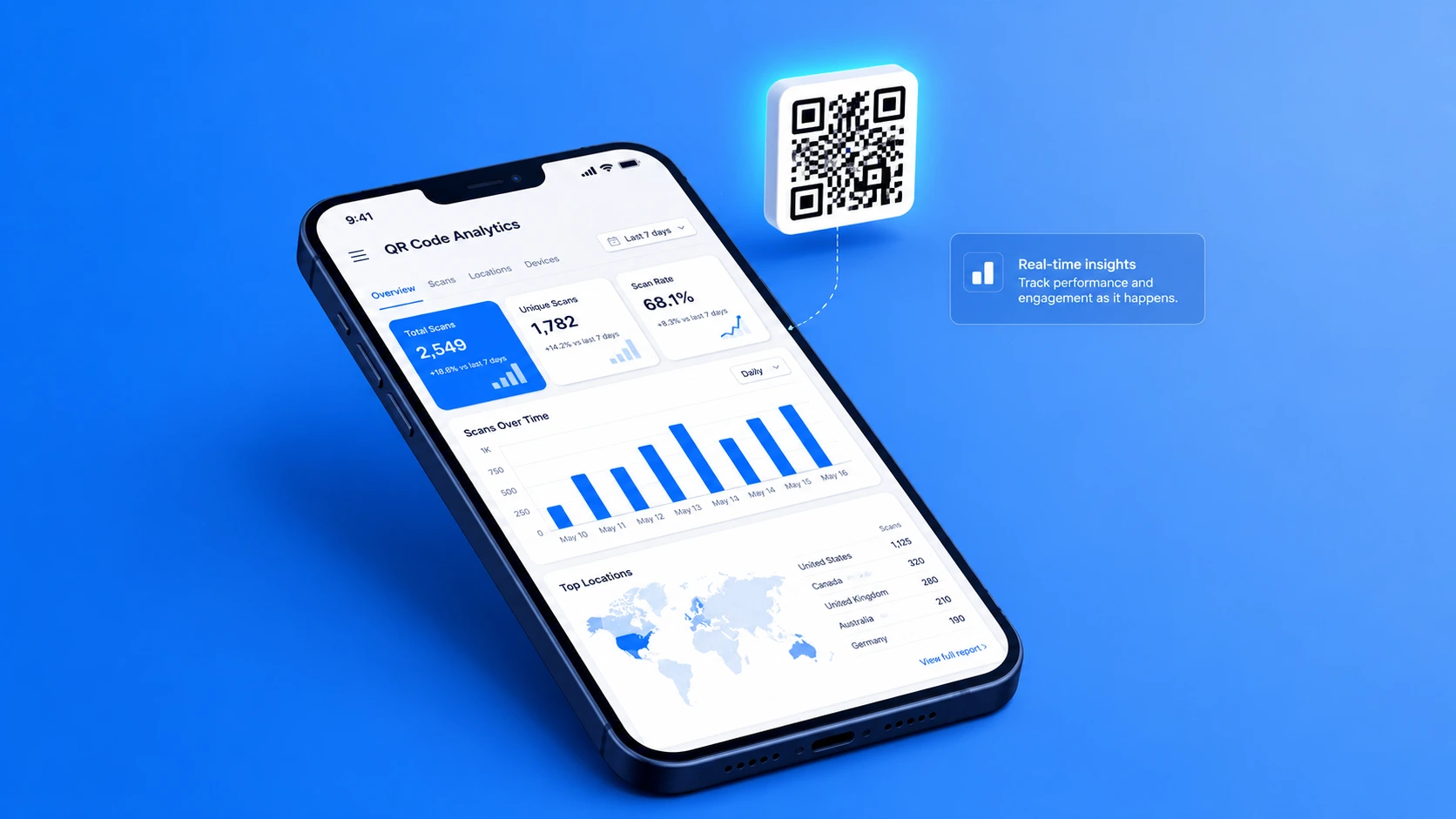
Professional link analytics platforms provide granular insights for every vanity URL you create. You gain access to click counts and unique visitor metrics, geographic heat maps showing where your audience lives, device and browser breakdowns, referrer source analysis, and precise timestamp data. This intelligence is invaluable for measuring campaign performance, understanding audience behavior, and optimizing future marketing investments.
6. Consistent Cross-Channel Presence
Whether you are sharing on Twitter, Instagram, LinkedIn, email newsletters, SMS campaigns, or physical billboards, a vanity URL maintains a professional and consistent appearance everywhere. This consistency strengthens your brand identity and ensures that no matter where customers encounter your links, they receive the same trustworthy experience.
7. Indirect SEO Benefits
While vanity URLs themselves are redirects, the increased sharing volume, higher click-through rates, and enhanced brand signals generate indirect but meaningful SEO advantages. When more people share and click your links, search engines interpret these engagement patterns as signals of quality and relevance. Additionally, using 301 redirects ensures that any accumulated link equity passes through to your destination page.
8. Campaign Flexibility and Agility
One of the most underappreciated benefits of vanity URLs is their flexibility. If your promotional landing page needs updating, your seasonal offer expires, or you discover a typo in your destination URL, you can modify the redirect target without changing the vanity URL you have already distributed. This agility saves reprinting costs, prevents broken links in old social posts, and allows you to A/B test different landing pages using the same shared address.
Real-World Examples
The world's most successful brands do not treat vanity URLs as an afterthought. They integrate them deeply into their marketing infrastructure, using dedicated short domains and consistent naming conventions to maximize every sharing opportunity. Examining how these organizations deploy vanity URLs provides a blueprint for your own strategy.
Amazon
Amazon operates one of the most recognizable vanity URL programs on the internet. Using the dedicated domain
amzn.to, the e-commerce giant transforms complex product and category URLs into concise, shareable
links. During major events like Prime Day, you will see amzn.to/PrimeDay distributed across social
media, email campaigns, and affiliate networks. The strategy is simple but powerful: every shared link reinforces
the Amazon brand while eliminating the friction of long, parameter-heavy product URLs.
Nike
Nike leverages the creative domain nike.shoes for its footwear marketing campaigns. Rather than
using a generic shortener, Nike selected a domain extension that reinforces its industry authority. A vanity URL
such as nike.shoes/running communicates the brand, the product category, and the destination intent
in just twenty characters. This approach demonstrates how thoughtful domain selection can amplify brand messaging
beyond simple shortening.
The New York Times
Journalism moves fast, and The New York Times uses nyti.ms to keep pace. On Twitter and in breaking
news alerts, the publication relies on vanity URLs to share stories without consuming precious character space.
The domain is instantly recognizable to their global readership, maintaining brand presence even in the rapid-fire
context of real-time news distribution.
Starbucks
Starbucks uses sbux.co to drive engagement with its rewards program, mobile app, and seasonal
promotions. The brevity of the domain makes it ideal for in-store signage, cup sleeves, and mobile app interfaces
where screen real estate is limited. Their vanity URL sbux.co/rewards is so short that customers can
easily type it while waiting in line.
TED Talks
The nonprofit media organization uses a dedicated short domain for every talk in its vast library. Speakers can share their presentations using memorable branded links, and fans can spread ideas without wrestling with complex URLs. This strategy aligns perfectly with TED's mission of making knowledge accessible and shareable.
URLDN
At URLDN, we practice the principles we preach. Every link we share uses our branded short domain to build trust and recognition with our community. Whether directing users to our features page or sharing educational content, we rely on vanity URLs to ensure that every touchpoint reflects our commitment to quality and user experience.
| Brand | Vanity Domain | Example URL | Strategic Purpose |
|---|---|---|---|
| Amazon | amzn.to |
amzn.to/PrimeDay |
Reinforce brand during high-traffic events and simplify product sharing |
| Nike | nike.shoes |
nike.shoes/running |
Align domain extension with industry identity and product categories |
| The New York Times | nyti.ms |
nyti.ms/breaking |
Maintain brand presence in fast-moving news and social conversations |
| Starbucks | sbux.co |
sbux.co/rewards |
Enable easy mobile and in-store access to loyalty programs |
| TED | t.ted.com |
t.ted.com/talk-name |
Empower speakers and audiences to share ideas effortlessly |
Vanity URLs for Marketing
Vanity URLs function as a versatile Swiss Army knife within your marketing toolkit. Their application spans virtually every channel and tactic, providing consistent branding and trackable performance regardless of where your audience encounters your message.
Email Marketing
Long URLs in email newsletters often break across lines, appear unprofessional, and trigger spam filter suspicion. Vanity URLs solve all three problems simultaneously. They keep your email templates clean, maintain brand consistency, and improve deliverability by signaling legitimacy to both users and email providers.
When implementing vanity URLs in email campaigns, align your custom slug with your email subject line for
thematic consistency. For example, if your subject line announces a summer sale, use
yourbrand.link/summer-sale as your primary call-to-action link. Behind the vanity URL, append UTM parameters to track email performance within your analytics platform without
cluttering the visible link.
Paid Advertising and PPC
In pay-per-click advertising where character limits are strict and every pixel of trust matters, vanity URLs
maximize your message space while maintaining brand presence. A Google Ad display URL showing
yourbrand.link/save-20 looks cleaner and more trustworthy than a long parameter-filled destination
address. This improved presentation quality can increase your quality score and reduce cost-per-click over time.
Content Marketing
Every blog post, whitepaper, case study, and research report you publish should have a dedicated vanity URL for
distribution. The workflow is straightforward: publish your content with a descriptive URL slug optimized for search engines, then create a vanity URL
optimized for human sharing. For example, a comprehensive guide published at
yourbrand.com/blog/the-complete-guide-to-vanity-urls-for-modern-marketers receives the vanity
counterpart yourbrand.link/vanity-guide for social media, email, and partner distribution.
Affiliate and Influencer Marketing
Give each influencer or affiliate partner a unique vanity URL to track their individual performance without
exposing ugly tracking parameters. Instead of asking an influencer to share a link containing
?utm_source=influencer&utm_medium=social&utm_campaign=q3, provide them with
yourbrand.link/sarah or yourbrand.link/mike. Their audience sees a clean, branded link,
while you capture precise attribution data behind the scenes.
Event Marketing
For webinars, conferences, trade shows, and virtual summits, vanity URLs are essential infrastructure. Use
yourbrand.link/register for event signups, yourbrand.link/slides for post-event resource
distribution, and yourbrand.link/feedback for attendee surveys. When mentioned from a stage or
displayed on a presentation screen, these short addresses are easy to note and easy to type.
Vanity URLs for QR Codes
Quick Response codes and vanity URLs represent a perfect technological marriage. Together, they solve the fundamental challenges of offline-to-online marketing: creating scannable, trustworthy, and editable pathways from physical materials to digital experiences.
Why Vanity URLs Matter for QR Codes
The relationship between URL length and QR code complexity is direct and significant. Shorter URLs generate simpler QR patterns with fewer data modules. This simplicity improves scan reliability, especially when codes are printed at small sizes, viewed from awkward angles, or scanned by older devices with less sophisticated cameras.
Beyond technical reliability, vanity URLs address the trust barrier that prevents many users from scanning
unknown codes. Modern smartphones display a preview of the destination URL before completing the scan. When a user
sees yourbrand.link/menu in that preview, they feel confident proceeding. When they see
bit.ly/7h3k9x, hesitation sets in.
Industry-Specific Use Cases
| Industry | Vanity URL Example | Application |
|---|---|---|
| Restaurants and Food Service | yourbrand.link/menu |
Table tents, takeout bags, delivery packaging, and window decals |
| Retail and E-commerce | yourbrand.link/reviews |
Printed receipts, product packaging, and in-store displays |
| Real Estate | yourbrand.link/listing |
For-sale signs, property flyers, and open house materials |
| Events and Hospitality | yourbrand.link/tickets |
Posters, wristbands, venue signage, and ticket confirmations |
| Healthcare | yourbrand.link/portal |
Appointment cards, clinic signage, and patient information packets |
| Education | yourbrand.link/apply |
Campus brochures, acceptance letters, and recruitment banners |
Editability Without Reprinting
Perhaps the most powerful advantage of pairing vanity URLs with QR codes is the ability to change the destination without reprinting physical materials. If your restaurant updates its seasonal menu, your retail store launches a new review campaign, or your real estate listing changes price, you simply update the vanity URL's redirect target. The thousands of QR code stickers, table tents, and signs you have already distributed remain functional and relevant.
Vanity URLs and SEO
A persistent misconception suggests that vanity URLs harm search engine optimization because they function as redirects. The reality is far more nuanced and, for marketers who implement them correctly, largely positive. Understanding how vanity URLs interact with search engines allows you to capture both direct and indirect SEO benefits.
Do Vanity URLs Pass Link Equity?
The answer depends entirely on the redirect type you configure. When you use a 301 permanent redirect, search engines understand that the vanity URL has permanently moved to the destination address. In this scenario, the vast majority of link equity—often estimated at 90 to 95 percent—passes through to the destination page. This means that backlinks earned by your vanity URL contribute to the ranking strength of your target content.
Conversely, a 302 temporary redirect tells search engines that the forwarding arrangement is not permanent. In this case, link equity remains associated with the vanity URL rather than flowing to the destination. While 302 redirects have legitimate uses, they should be avoided for long-term content and evergreen campaigns.
Indirect SEO Advantages
Even though vanity URLs are technically redirects, they generate substantial indirect SEO value through several mechanisms:
- Increased Sharing Volume: People are more likely to share a branded, trustworthy link across their own websites and social profiles. Each share represents a potential backlink or social signal that search engines may consider.
- Higher Click-Through Rates: More clicks from search results, social platforms, and email campaigns send positive engagement signals to search engines about the quality and relevance of your content.
- Brand Search Growth: When users remember your vanity URL, they often search for your brand directly. Increased branded search volume is a strong indicator of brand authority and can improve your overall search presence.
- Reduced Bounce Signals: Users who click trusted links arrive with positive expectations, potentially spending more time on your site and reducing bounce rate indicators.
SEO Best Practices for Vanity URLs
To maximize the search engine value of your vanity URL strategy, adhere to these proven technical guidelines:
- Always use 301 redirects for permanent campaigns and evergreen content
- Include relevant keywords in your custom slug, such as
/seo-guiderather than/page1 - Keep all slugs lowercase and separated by hyphens rather than underscores or spaces
- Avoid unnecessary stop words like "the," "and," and "of" unless they are essential for readability
- Update destination URLs promptly if content moves, and never allow vanity URLs to return 404 errors
- Implement a consistent canonical strategy on your destination pages to prevent duplicate content issues
Best Practices
Creating vanity URLs is simple, but creating vanity URLs that consistently drive results requires discipline and strategy. The following best practices represent the accumulated wisdom of top-performing marketing teams who treat every link as a brand touchpoint.
1. Keep It Short and Simple
Aim for fewer than twenty characters for the complete vanity URL, domain included. The shorter your link, the easier it is to type from memory, fit into tight design spaces, and share verbally. If your slug requires more than two or three words, you are likely trying to communicate too much within the URL itself. Let the destination page handle the detailed explanation.
| Ineffective Slug | Effective Slug | Why It Works |
|---|---|---|
/summer-sale-2026-promo-code |
/summer |
Removes unnecessary words; the context provides the rest |
/how-to-create-vanity-urls-guide |
/vanity |
Uses the core topic keyword without filler phrases |
/register-for-webinar-now-today |
/webinar |
Eliminates urgency words that clutter without adding meaning |
2. Make It Readable
Your custom slug should be instantly understandable at a glance. If you say it aloud during a podcast or phone conversation, the listener should be able to type it correctly without asking for spelling clarification. Avoid ambiguous words, homophones, and creative spellings that create friction.
3. Use Consistent Naming Conventions
Establish a systematic taxonomy for your organization before you begin creating links at scale. Consistent conventions help your team work efficiently and help your audience recognize patterns. Consider frameworks such as:
/blog-post-titlefor blog content and editorial resources/product-namefor product pages and feature launches/event-yearfor annual events and recurring campaigns/campaign-channelfor channel-specific landing pages
4. Match the Slug to the Destination
The custom slug should give users an accurate preview of where they will land. A mismatch between expectation and
reality creates confusion and erodes trust. If your vanity URL is yourbrand.link/pricing, it should
direct users to your pricing page, not your homepage or an unrelated product feature.
5. Always Use HTTPS
Never create vanity URLs using unencrypted HTTP connections. The padlock icon in browser address bars has become a baseline trust signal that users subconsciously expect. An HTTPS vanity URL protects your users' data and protects your brand's reputation.
6. Track Everything with UTM Parameters
Append UTM parameters to your destination URLs before shortening them. This practice allows you to attribute traffic accurately within Google Analytics or your preferred analytics platform without cluttering the visible vanity URL that your audience sees.
7. Maintain a Link Inventory
As your vanity URL program grows, maintaining documentation becomes essential. Whether you use a spreadsheet or the built-in link management features of URLDN's campaign tools, track what each vanity URL points to, which team member created it, when it was launched, and when it should expire or be reviewed.
8. Test Before You Share
Always click your vanity URL before publishing it to any channel. Verify that it redirects to the correct page, loads within an acceptable timeframe, displays properly on mobile devices, and does not trigger any browser security warnings. A single broken link in a high-visibility campaign can waste thousands of dollars in media spend.
Common Mistakes
Even experienced marketing professionals make errors with vanity URLs that undermine their campaigns. Recognizing these pitfalls before they occur saves you from broken links, missed branding opportunities, and confused audiences.
1. Using Generic Domains
Every time you share a link using a generic domain like bit.ly or tinyurl.com, you
waste a branding opportunity and signal to your audience that you have not invested in your own infrastructure.
You are also building value for the generic service rather than for your own brand.
2. Creating Overly Complex Slugs
Long, hyphen-heavy slugs defeat the primary purpose of shortening. If your vanity URL is difficult to type from memory, it is too long. Remember that the destination page will provide all necessary context. The URL itself only needs to be a memorable pointer.
3. Ignoring Case Sensitivity
While most modern web servers handle URLs in a case-insensitive manner, some platforms and content delivery networks enforce strict case sensitivity. To eliminate any risk of broken links, always create and share vanity URLs using lowercase characters exclusively.
4. Allowing Links to Expire Unnoticed
A vanity URL that redirects to a 404 error page damages trust and wastes traffic. Establish a quarterly audit process to review all active vanity URLs, update destinations for expired campaigns, and retire links that are no longer relevant.
5. Neglecting UTM Tracking
If you are not tagging your destination URLs with UTM parameters, you are flying blind on attribution. You cannot optimize what you cannot measure. Always implement tracking behind your vanity URLs to understand which channels and campaigns drive the best results.
6. Using Temporary Redirects for Permanent Content
Deploying a 302 redirect for an evergreen guide or foundational resource means you are not receiving the full SEO benefit of shares and backlinks. Audit your redirect types and convert long-term content to 301 redirects.
7. Creating Links Without a Strategy
Random, inconsistent slugs confuse your internal team and your external audience. A visitor who sees
/summer-sale one year and /summer-sale-2026 the next cannot predict your URL patterns.
Establish conventions and stick to them.
8. Forgetting Mobile Context
Many vanity URLs are typed manually on smartphones with small keyboards and autocorrect features. Slugs that rely on unusual spellings or hyphenated phrases are prone to input errors on mobile devices. Test the mobile typing experience for every important vanity URL.
How to Create a Vanity URL
Creating professional vanity URLs does not require technical expertise or complex infrastructure. With the right platform, you can have your first branded link live and ready to share within minutes. The process involves three straightforward phases: domain setup, link creation, and distribution.
Step 1: Connect Your Branded Domain
Begin by selecting a short domain that reflects your brand identity. Many organizations use variations such as
yourbrand.link, go.yourbrand.com, or creative industry-specific extensions like
yourbrand.shoes. Once you have registered your domain, connect it to your link management platform. URLDN provides simple DNS configuration guides, and our
support team can handle the technical setup for you if preferred.
Step 2: Create Your Vanity URL
Once your domain is active, creating a vanity URL takes seconds:
- Paste your long destination URL into the URLDN dashboard
- Select your branded short domain from the dropdown menu
- Enter your desired custom slug, such as
summer-saleorguide - Choose your redirect type: 301 for permanent content or 302 for temporary promotions
- Add UTM parameters for campaign tracking if desired
- Click create and your vanity URL is live instantly
Step 3: Share and Monitor
Your vanity URL is now ready for distribution across all channels. As clicks begin to accumulate, monitor performance through your analytics dashboard. URLDN provides real-time data on total clicks, unique visitors, geographic distribution, device and browser breakdowns, referrer sources, and click-through timelines.
Advanced Features for Power Users
| Feature | Functionality | Ideal Use Case |
|---|---|---|
| Link Expiration | Set vanity URLs to expire after a specific date or number of clicks | Limited-time offers, flash sales, and event registrations |
| Password Protection | Require a password before allowing access to the destination | Exclusive content, beta programs, and client portals |
| Geo-Targeting | Redirect users to different pages based on their geographic location | Regional campaigns, multilingual sites, and local promotions |
| A/B Testing | Split traffic between two destination URLs automatically | Landing page optimization and conversion rate experiments |
| QR Code Generation | Automatically generate scannable QR codes for every vanity URL | Print materials, packaging, and in-store displays |
| Bio Link Pages | Create branded landing pages housing multiple links | Instagram bios, TikTok profiles, and email signatures |
| Team Collaboration | Share link management access with team members and roles | Marketing teams, agencies, and multi-department organizations |
| API Access | Create and manage vanity URLs programmatically via API | Enterprise integrations, automated campaigns, and developer workflows |